Dravyaguna: The Science of Ayurvedic Pharmacology
Dravyaguna is a fundamental branch of Ayurveda that deals with the study of medicinal herbs and substances. Often described as the "Ayurvedic Pharmacology," it combines the study of a substance's physical properties with its therapeutic effects on the human body and mind.
The term is derived from two Sanskrit words:
-
Dravya: Substance or matter.
-
Guna: Quality or property.
The Five Pillars of Dravyaguna (Pancha-Sheela)
To understand how a plant works as a medicine, Ayurveda evaluates it through five distinct parameters:
-
Rasa (Taste): There are six tastes (Shad-rasa)—Sweet, Sour, Salty, Pungent, Bitter, and Astringent. The taste is the first indicator of a herb’s action.
-
Guna (Properties): These are the 20 physical attributes (like heavy/light, oily/dry, hot/cold) that determine how the substance interacts with the body's tissues.
-
Virya (Potency): The energy of the substance, usually categorized as Ushna (Heating) or Sheeta (Cooling).
-
Vipaka (Post-Digestive Effect): The taste that emerges after the substance has been digested, which dictates its long-term action on the body.
-
Prabhava (Unique Action): A special characteristic or "hidden power" of a herb that cannot be explained simply by its taste or potency alone.
Importance in Healing
In Ayurveda, "Dravya" is considered the second most important limb of the Chikitsa Chatushpada (The Four Pillars of Treatment), following the Physician.
-
Balancing Doshas: Every herb is used to increase or decrease the Vata, Pitta, or Kapha doshas to restore equilibrium.
-
Dhatu Poshan: It focuses on how substances nourish the seven bodily tissues (Dhatus).
-
Srotas Shodhana: Many herbs are studied for their ability to cleanse the body's channels (Srotas) and remove toxins (Ama).
Classification of Medicinal Substances
Dravyaguna categorizes substances based on their origin:
-
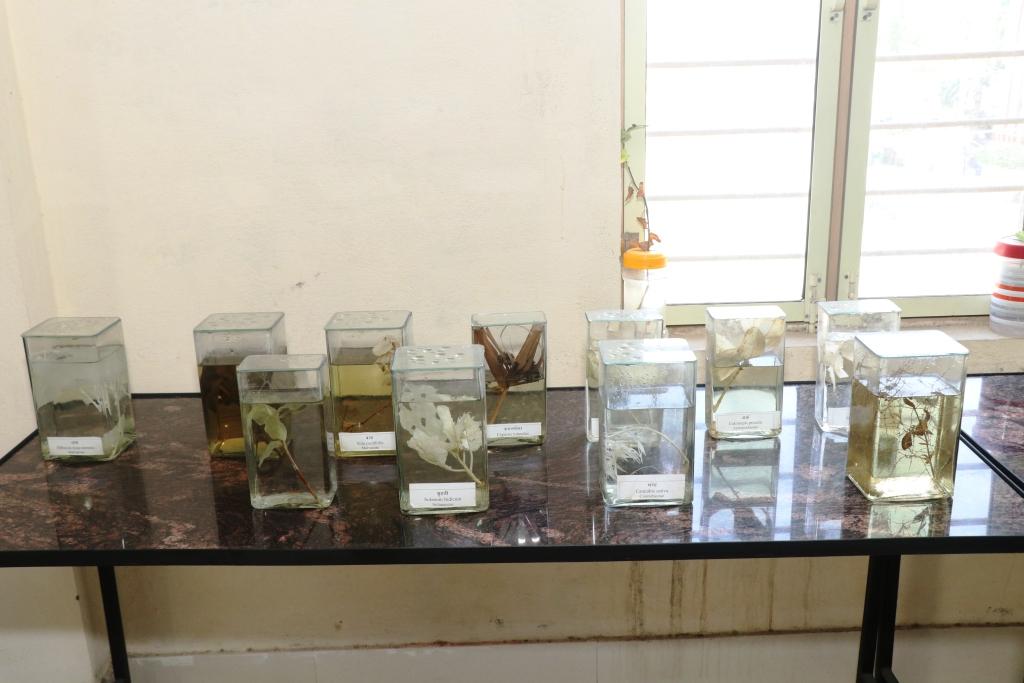
Audbhida (Vegetable): Herbs, roots, bark, leaves, and fruits.
-
Jangama (Animal): Honey, milk, ghee, and corals.
-
Parthiva (Mineral): Gold, silver, copper, and various minerals (often processed as Bhasmas).
Why Dravyaguna Matters Today
In an era of natural wellness, Dravyaguna provides a sophisticated framework for personalized medicine. It doesn't just treat the symptom; it looks at the individual’s constitution (Prakriti) and the qualities of the medicine to ensure a holistic cure without side effects.
"There is nothing in this universe which is not a medicine, provided it is used with the right intention and in the right proportion." — Charaka Samhita